Calling for urgent action to safeguard these ecosystems as vital ecological and cultural assets for current and future generation.
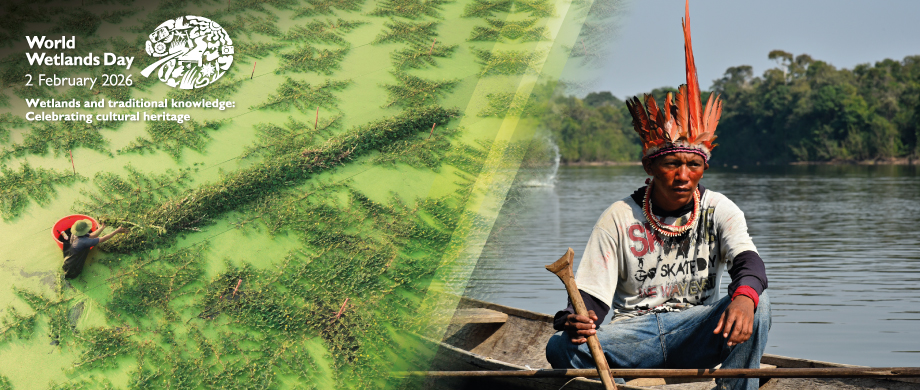
Wetlands are fundamental to global food security and nutrition. They support inland and coastal fisheries and aquaculture, and supply water for crops and livestock production. They also underpin the production of staple foods, particularly in human-made wetlands, such as rice paddies and ponds that have been shaped by generations of traditional knowledge. Wetlands provide critical ecosystem services, essential for agrifood systems, including water purification, flood regulation, groundwater recharge, carbon storage and sequestration, which are essential for climate resilience, food security, and rural livelihoods.
This year’s theme, Wetlands and Traditional Knowledge: Celebrating Cultural Heritage, highlights the deep connections between wetlands and people, calling for urgent action to safeguard these ecosystems as vital ecological and cultural assets for current and future generations.
The Celebration of World Wetlands Day 2026 will coincide with the 50th Anniversary of Italy’s ratification of the Ramsar Convention on Wetlands, adopted in 1971. The event will be co-organized by the Italian Permanent Representation of Italy to the United Nations, the Italian Ministry of Environment and Energy Security (MASE), Istituto Superiore per la Protezione e la Ricerca Ambientale (ISPRA), the Lazio Region, the Nazzano Tevere–Farfa Regional Nature Reserve, and the RAMSAR Convention on Wetlands, with the technical support of FAO. It will be held at FAO headquarters in Rome, Italy, and online, on 2 February 2026. This session will be followed by afternoon events at the Nazzano Tevere–Farfa Regional Nature Reserve – Italy’s first Ramsar site.
This year’s theme resonates strongly with FAO’s mandate to transform agrifood systems to be more efficient, inclusive, resilient, and sustainable. Moreover, it underscores the urgent need to protect, restore, and sustainably use wetlands by valuing traditional knowledge as a cornerstone for ecosystem restoration, climate resilience, and sustainable agrifood systems, in line with the UN Decade on Ecosystem Restoration (2021–2030).
REGISTER HERE TO ATTEND THE EVENT ONSITE or REGISTER HERE TO ATTEND THE EVENT ONLINE


Comments
Post a Comment